(Project)
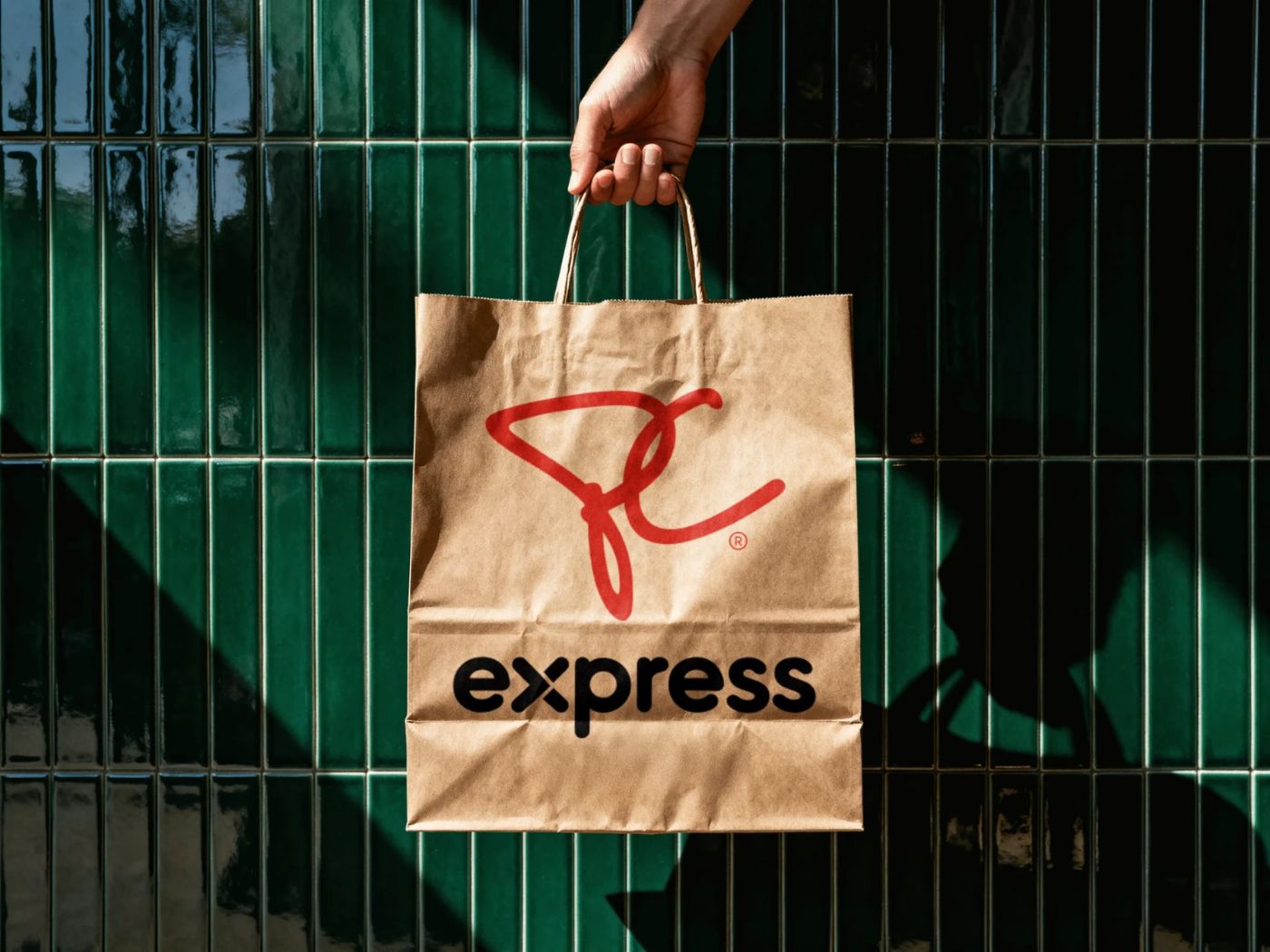
PC Express: from missing items to trusted delivery
(Client)
Loblaw Companies (academic project)
(Year)
©24
(Role)
Service Designer & Video Director
(Scope)
Service Design, UX Research, Branding, Filming
(The challenge)
How might we prevent lost items while building transparency and trust in PC Express?
(Outcomes)
2,237
app reviews analysed
4
quick wins proposed to the PC Express team
2
sides of the service redesigned
01
(Research)
We became customers first.
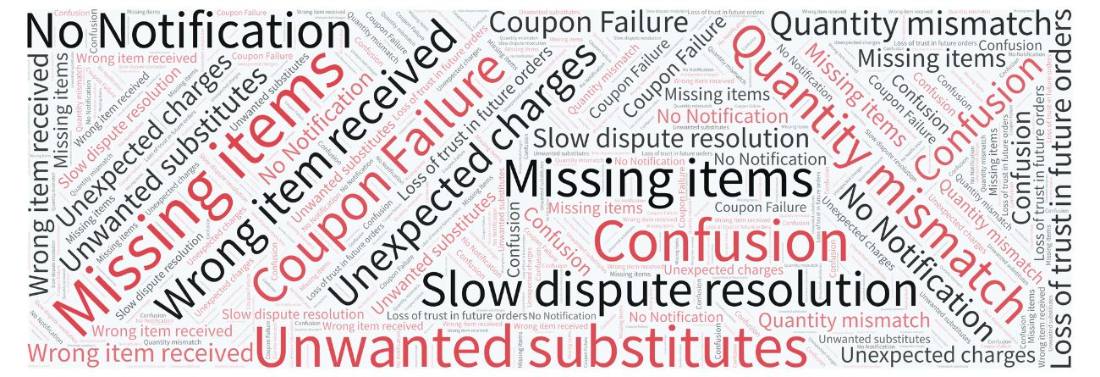
We used PC Express ourselves and gathered stories from regular users. They repeated: items missing with no explanation, out-of-stock surprises, and no clear way to report it in the app.
To widen the evidence we scraped 2,237 negative reviews from the App Store and Google Play and clustered them into a pain-point map.
02
(Insight)
The problem wasn't only on the customer side.
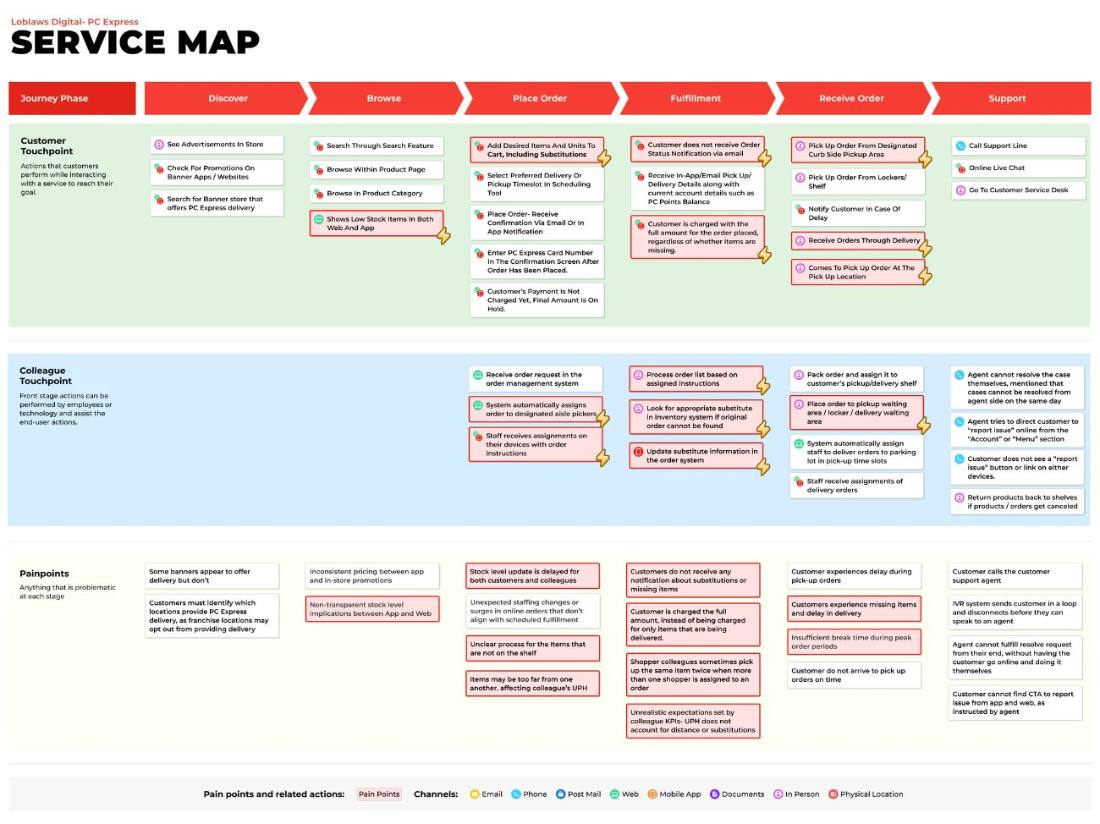
Conversations with the PC Express UX team surfaced the other half of the story: shift handoffs, duplicated picking and unclear accountability for missing items.
We traced customer and colleague workflows side by side in a service map and marked every point of friction.
03
(Metrics)
Designing for the numbers the team already watches.
PC Express tracks Perfect Order and OSAT. Perfect Order rewards accuracy but can penalise colleagues for stock they never had; OSAT drops with missing items, thin status updates and uneven support.
Our goal: more accuracy and transparency, without making the process unfair for the people doing the picking.

04
(Quick wins)
Small changes. Real impact.
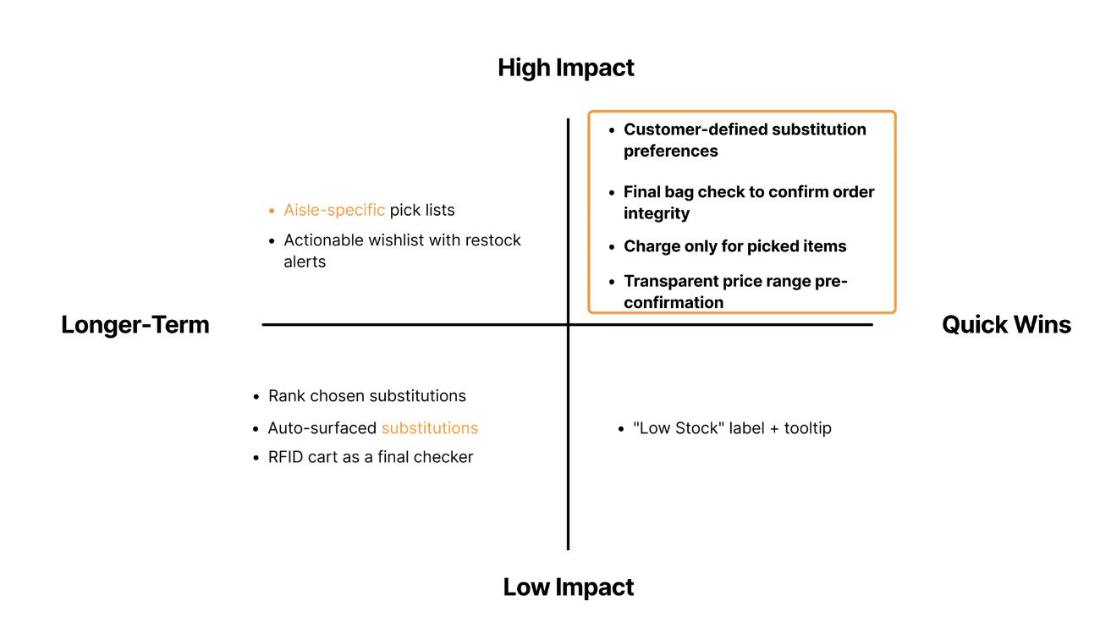
We prioritised changes the team could ship with the resources they already had:
A
Customer-defined substitutions
Choose preferred substitutes while shopping, not at the cart.
B
Final bag check
A quick colleague review before handoff catches missing or wrong items.
C
Charge only for picked items
Customers pay for what they actually receive.
D
Transparent price range
Checkout shows the range substitutions could land in.
05
(Customer side)
Transparency before checkout.
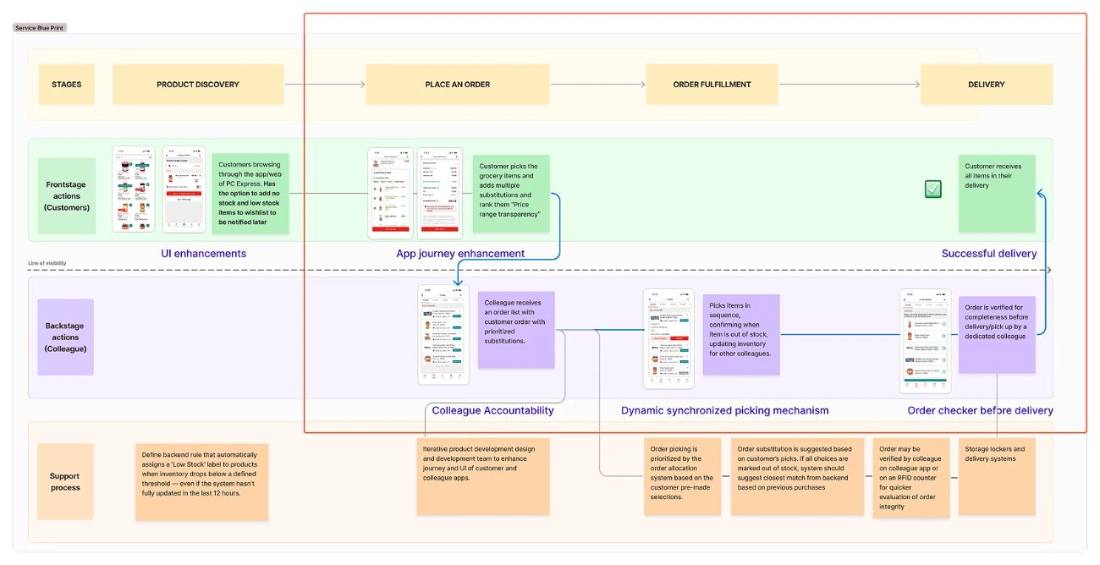
Stock labels now separate regular, low-stock and out-of-stock items. Low stock prompts a substitution choice; out-of-stock items can be saved to a Restock Wishlist.
Customers rank up to three substitutes and see an estimated final price range, so there are no surprises on the receipt.
06
(Colleague side)
Accountability built into the workflow.
A synchronised, tabbed picking list lets colleagues multitask, save progress and hand off cleanly between shifts.
A fulfilment checklist before handoff makes sure every item in the order has been addressed.
07
(Storytelling)
Some systems are best understood as a story.
For the final deliverable I directed a service design film — locations, voiceover, edit and music — so the journey, its breakdowns and our fixes made sense to people who would never read a service map.
(Final thoughts)
Most experience problems are not missing features but misalignment across the system. Fix the right things at the right time and trust follows.
(Next step)
Want the full story behind this project? I'm happy to walk you through it.